End Suction Pump vs. Split Case Pump: Which One Should You Choose?
End Suction Pump vs Split Case Pump: Which One Should You Choose
End suction pumps and split case pumps are both common centrifugal pump types for water supply, HVAC, irrigation, fire protection and industrial transfer systems. The right choice depends on flow rate, head, installation space, maintenance requirements, efficiency and project budget.
Get Quote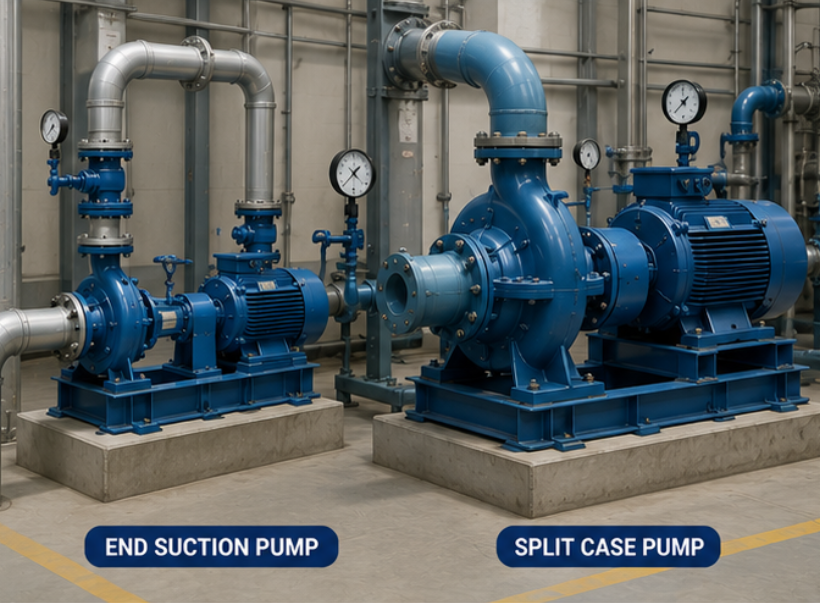
1. What Is An End Suction Pump?
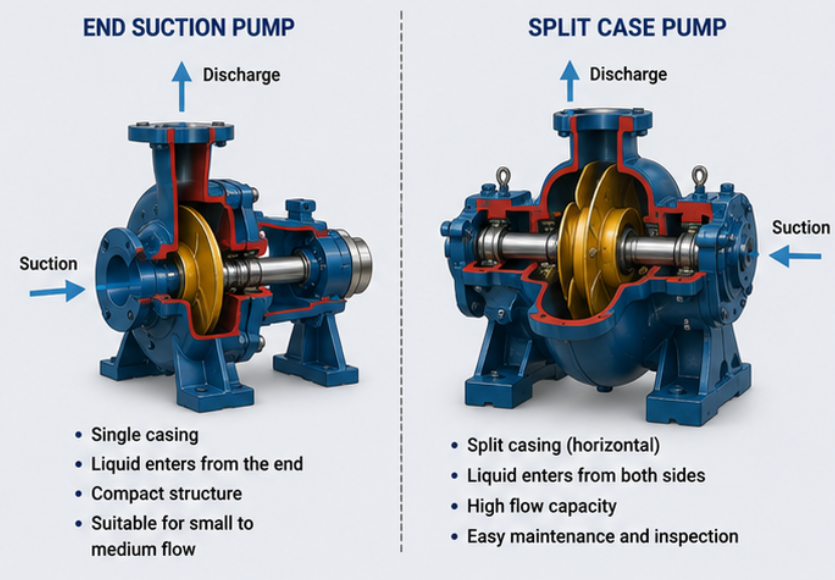
An end suction pump is a centrifugal pump where liquid enters from one end of the pump casing and discharges from the top or side. It is widely used for general water transfer, building water supply, irrigation, cooling circulation and smaller industrial systems.
End suction pumps are usually compact, economical and easier to install. They are suitable for projects with moderate flow and head requirements where space and budget are important considerations.
2. What Is A Split Case Pump?
A split case pump is a centrifugal pump with a casing that can be split horizontally or vertically for easier inspection and maintenance. It is commonly used in high-flow applications such as large buildings, HVAC systems, municipal water supply, irrigation stations and fire protection systems.
Split case pumps are often selected when stable performance, high flow capacity, long service life and easier maintenance are required. They usually cost more than end suction pumps, but they can provide better lifecycle value for larger projects.
3. Compare Flow Rate And Application Range
End suction pumps are commonly used for small to medium flow applications. They are suitable when the system does not require very large water volume. Split case pumps are better for large flow applications where continuous and stable operation is required.
For example, a small factory water transfer system may use an end suction pump, while a large hotel, commercial building, irrigation station or fire pump room may require a split case pump.
4. Compare Maintenance And Service Access
Maintenance access is one of the biggest differences between the two pump types. End suction pumps are simple and compact, but some maintenance work may require removing pipe connections or moving the motor.
Split case pumps allow easier access to internal components because the casing can be opened for inspection. This is useful for large pump rooms, long-term operation and projects where downtime must be minimized.
5. Compare Cost And Lifecycle Value
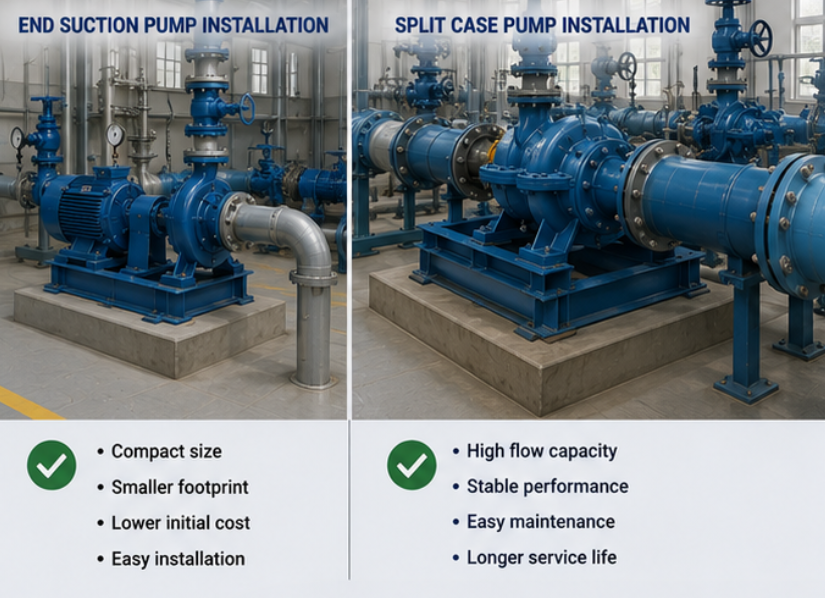
End suction pumps usually have a lower initial cost, smaller footprint and simpler installation. They are a good choice for standard water transfer and medium-duty applications.
Split case pumps usually have a higher initial cost, but they may offer better efficiency, longer service life and easier maintenance for large systems. For projects with high operating hours, lifecycle cost may be more important than purchase price.
6. End Suction Pump vs Split Case Pump Comparison
| Factor | End Suction Pump | Split Case Pump |
|---|---|---|
| Best For | Small to medium water transfer systems | Large flow and continuous operation projects |
| Flow Capacity | Moderate | High |
| Installation Space | Compact | Larger footprint |
| Maintenance | Simple, but may require pipe or motor movement | Easier casing access for inspection |
| Initial Cost | Lower | Higher |
| Typical Applications | Water supply, irrigation, circulation, small industrial systems | HVAC, fire systems, municipal water, large buildings, irrigation stations |
Conclusion
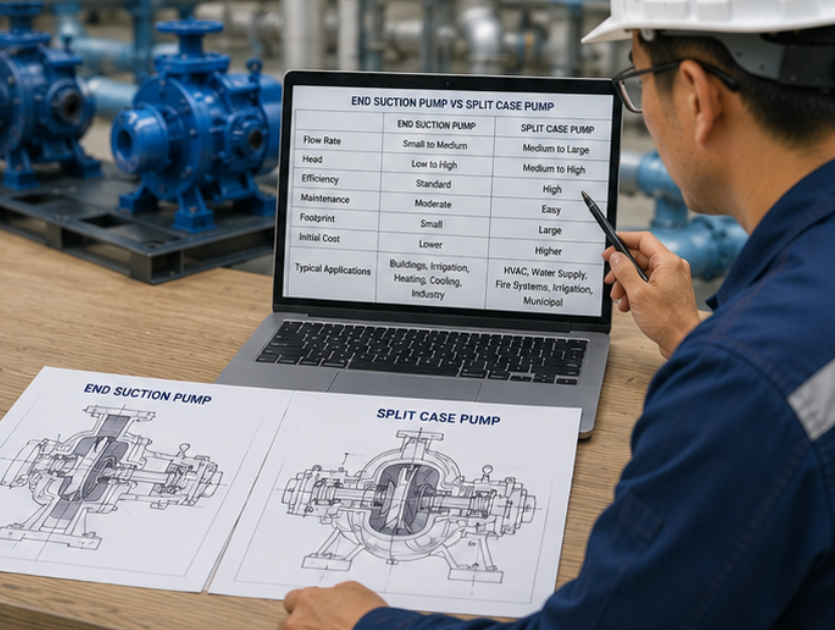
Choose an end suction pump if your project needs a compact, economical pump for standard water transfer, irrigation or industrial circulation. Choose a split case pump if your project requires high flow, stable long-term operation and easier maintenance access.
GT Pump provides end suction pumps, split case pumps and complete pump solutions for building, industrial, irrigation, fire protection and water transfer projects. Our team can help review your flow rate, head and working conditions to recommend a suitable pump type.
Need Help Choosing Between End Suction And Split Case Pumps?
Send your flow rate, head, application and installation requirements to GT Pump for fast pump selection support.
Contact Us Get Quote