How to Choose a Submersible Pump for Sewage and Drainage
How To Choose A Submersible Pump For Sewage And Drainage
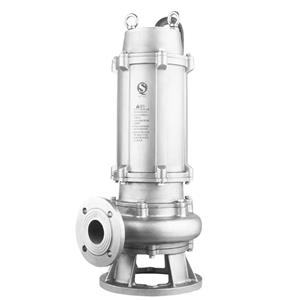
Submersible pumps are widely used for sewage transfer, wastewater drainage, construction dewatering, basement drainage and municipal pumping stations. Choosing the right model helps reduce clogging, motor failure, leakage and maintenance cost.
Get Quote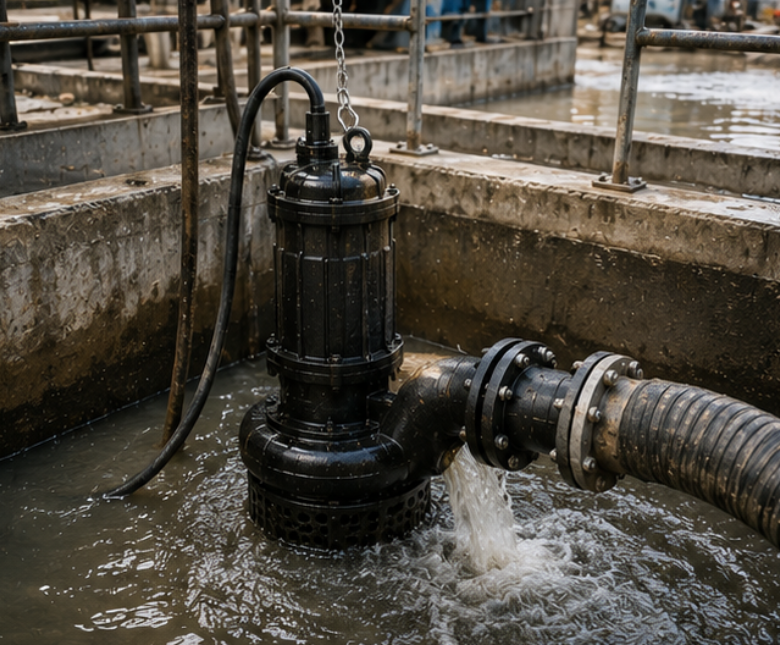
1. Confirm The Application First
Before selecting a submersible pump, buyers should confirm whether it will be used for sewage transfer, wastewater treatment, stormwater drainage, basement drainage, construction dewatering or industrial wastewater discharge.
Different applications require different pump structures. A basement drainage pump may not be suitable for sewage with solids. A sewage pump for municipal stations may need stronger anti-clogging design, larger solid passage and better motor protection.
2. Check Water Quality And Solid Content
Sewage and drainage water may contain sand, sludge, fibers, paper, plastic, gravel or other suspended solids. Buyers should confirm particle size, fiber content and sludge concentration before asking for a quotation.
For dirty water or sewage, solid passage and anti-clogging performance are often more important than motor power alone. Choosing the wrong impeller may lead to frequent blockage and downtime.
3. Calculate Flow Rate And Head
Flow rate determines how much water or sewage the pump needs to discharge within a certain time. Head includes vertical lift, pipeline length, elbows, valves and discharge pressure.
If the pump head is too low, sewage cannot be discharged to the target location. If the pump is oversized, it may waste energy and operate outside the efficient range.
4. Choose The Right Impeller Type
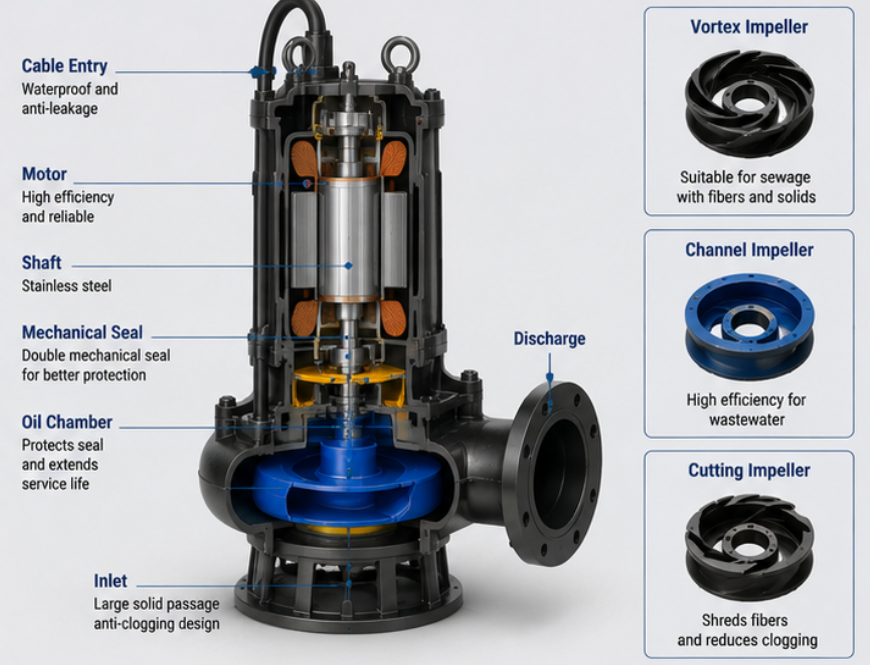
Impeller design directly affects pump performance and clogging resistance. Common options include vortex impellers, channel impellers and cutting impellers.
Vortex impellers are suitable for sewage with solids and fibers. Channel impellers offer higher efficiency for wastewater with moderate solid content. Cutting impellers can help shred fibrous materials before pumping.
5. Check Motor Protection And Sealing
Because the whole pump works underwater, motor protection and sealing reliability are critical. Buyers should check mechanical seal design, cable sealing, insulation grade, overload protection and temperature protection.
For wastewater plants, municipal drainage stations or long-term operation, leakage detection and thermal protection can help reduce motor failure risk.
6. Consider Installation And Maintenance
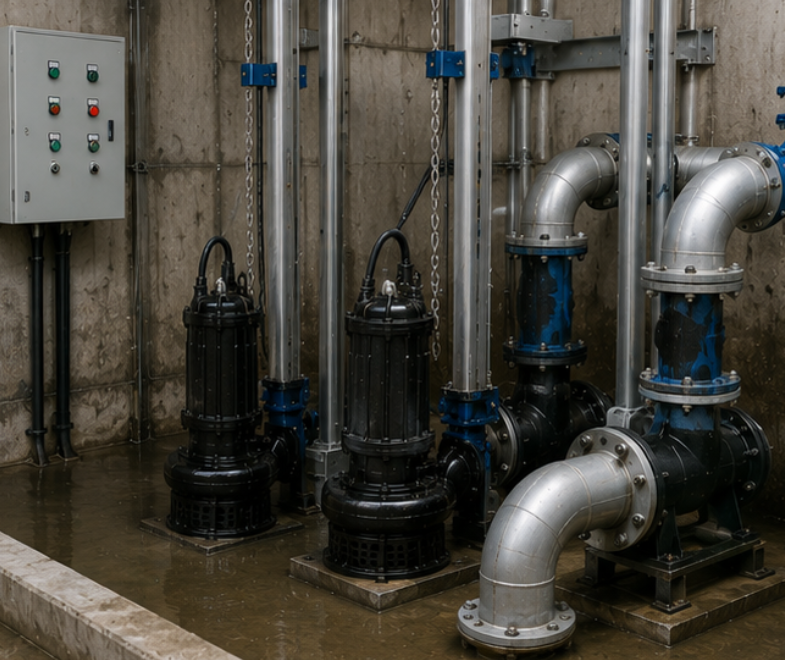
Submersible pumps can be installed directly in pits, tanks or wells. For larger sewage stations, guide rail installation and automatic coupling systems make maintenance easier because the pump can be lifted without entering the pit.
Buyers should also confirm cable length, lifting chain, outlet connection, control cabinet and available maintenance space.
| Selection Factor | What Buyers Should Confirm |
|---|---|
| Application | Sewage, drainage, wastewater, basement, construction or municipal station |
| Water Quality | Clean water, dirty water, sewage, sludge, sandy water or mixed wastewater |
| Solid Content | Particle size, fibers, sludge concentration and possible clogging materials |
| Flow Rate | Required capacity in m³/h, L/min or GPM |
| Head | Vertical lift, pipe length, elbows, valves and discharge pressure |
| Installation | Pit installation, tank installation, guide rail system or fixed coupling |
| Protection | Mechanical seal, leakage detection, overload and temperature protection |
Conclusion
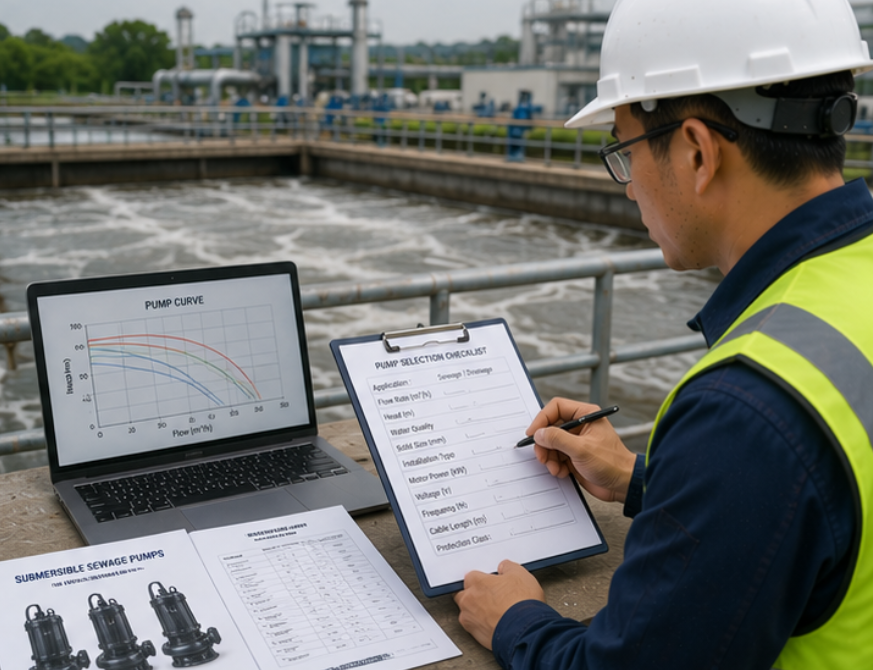
To choose a submersible pump for sewage and drainage, buyers should confirm the application, water quality, solid content, flow rate, head, impeller type, motor protection, sealing system and installation method.
GT Pump provides submersible pump solutions for sewage transfer, wastewater treatment, construction drainage, municipal drainage and basement pumping projects. Our team can help review your working conditions and recommend a suitable pump model.
Need A Submersible Pump Solution?
Send your water quality, solid content, flow rate, head and installation requirements to GT Pump for fast pump selection support.
Contact Us Get Quote