How To Choose A Pump For Agricultural Irrigation Projects
How To Choose A Pump For Agricultural Irrigation Projects
Choosing the right irrigation pump affects water delivery efficiency, crop growth, energy cost and long-term project reliability. Buyers should check water source, flow rate, head, irrigation method, power supply, water quality and installation environment before ordering.
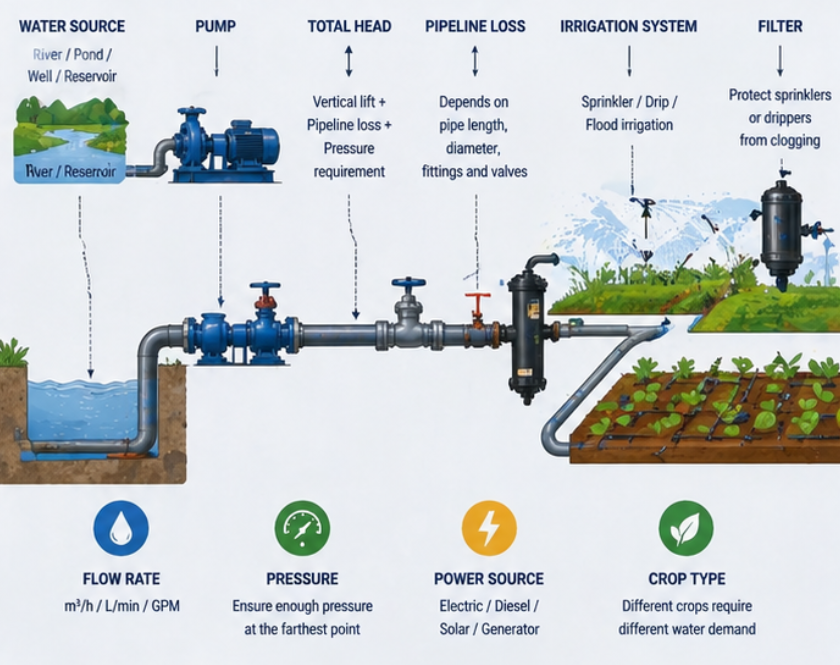
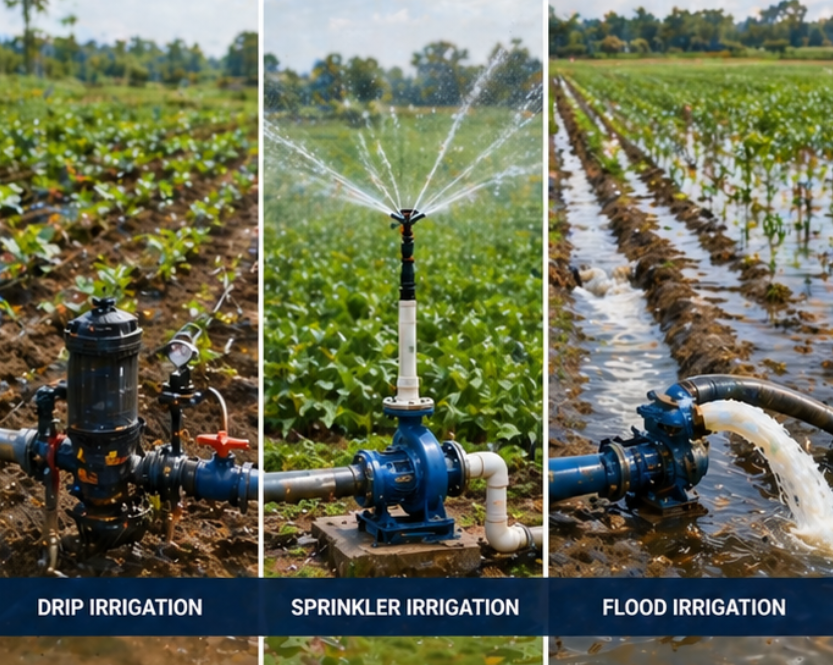
Get QuoteThe first step in selecting an irrigation pump is to confirm the water source. Farms may use river water, lake water, well water, pond water, reservoir water or groundwater. Different water sources require different pump structures and installation methods. If the water source is a deep well, a submersible pump or deep well pump may be required. If water is taken from a river or pond, a centrifugal pump or diesel water pump may be more suitable. If the water contains sand, mud or organic matter, buyers should also consider filtration, wear resistance and pump clogging risk. Flow rate determines how much water the pump can deliver to the irrigation area within a certain time. It is usually expressed in m³/h, L/min or GPM. The required flow rate depends on farm size, crop type, irrigation schedule, soil condition and irrigation method. For large farmland, the pump may need to deliver a high volume of water in a limited irrigation window. For greenhouse or drip irrigation projects, stable and controllable flow may be more important than very high capacity. Buyers should avoid choosing a pump only by outlet size or motor power. Head is another key parameter for irrigation pump selection. It includes vertical lift from the water source, pipeline distance, pipe friction loss, valves, filters and required pressure at the irrigation outlet. In agricultural irrigation projects, long pipelines are very common. Even if the vertical height is not high, long pipe distance can create significant pressure loss. If the pump head is too low, water cannot reach the farthest field or sprinkler. If the head is too high, energy consumption may increase and the irrigation system may become unstable. Different irrigation methods require different pump performance. Flood irrigation usually requires high flow and moderate pressure. Sprinkler irrigation needs stable pressure and enough head to ensure uniform spraying. Drip irrigation requires clean water, stable pressure and good filtration to prevent emitter blockage. For agricultural buyers, matching the pump with the actual irrigation system is more important than selecting the biggest pump. A correctly matched pump can improve irrigation uniformity, reduce energy waste and protect crops from uneven water supply. Power supply is a major factor in irrigation pump selection. Electric pumps are suitable for farms with stable grid power and fixed pump stations. Diesel water pumps are useful for remote farms, temporary irrigation and areas without reliable electricity. Solar water pumps can be considered for sunny regions where long-term energy cost reduction is important. Buyers should compare initial investment, operating cost, mobility, maintenance and local power conditions. For large agricultural projects, the best solution may include multiple pump types for different fields, water sources or seasonal requirements. Agricultural irrigation pumps are widely used for crop irrigation, greenhouse water supply, orchard irrigation, livestock farm water transfer, farmland drainage, pond water circulation and remote agricultural water supply projects. For overseas buyers, correct pump selection can reduce water waste, improve irrigation efficiency and lower long-term operating cost. Providing accurate field data before quotation helps the pump manufacturer recommend a better model and configuration. To choose a pump for agricultural irrigation projects, buyers should confirm the water source, required flow rate, total head, irrigation method, power supply, water quality and installation conditions. A suitable pump should match the real farm system, not only the lowest price or largest motor power. GT Pump provides irrigation pump solutions for farmland, greenhouse, orchard, livestock farm and agricultural water transfer projects. Our team can help review your field conditions and recommend a suitable pump configuration. Send us your water source, flow rate, head, irrigation method, power condition and field size. GT Pump will help you choose the right pump for your agricultural project.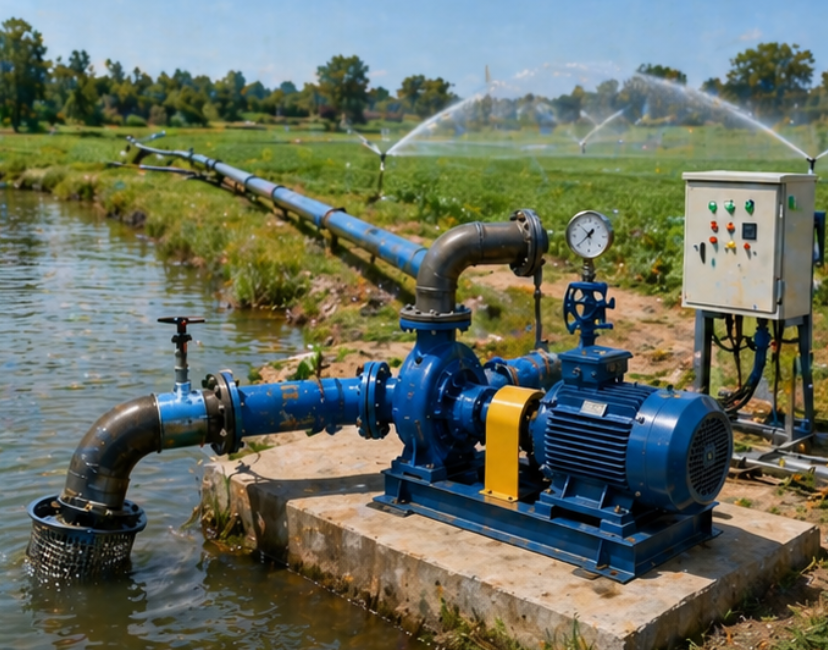
1. Confirm The Water Source First
2. Calculate Required Flow Rate
3. Check Head, Distance And Pipeline Loss
4. Match The Pump With The Irrigation Method
5. Choose Electric, Diesel Or Solar Pump Configuration
6. Agricultural Irrigation Pump Buying Checklist
Item What Buyers Should Confirm Water Source River, pond, reservoir, lake, well, deep well or groundwater Flow Rate Required water capacity in m³/h, L/min or GPM Total Head Vertical lift, pipe distance, pressure loss and outlet pressure Irrigation Method Flood irrigation, sprinkler irrigation, drip irrigation or greenhouse irrigation Power Source Electric power, diesel engine, solar system or generator Water Quality Sand, mud, algae, organic matter, filtration and wear resistance requirements 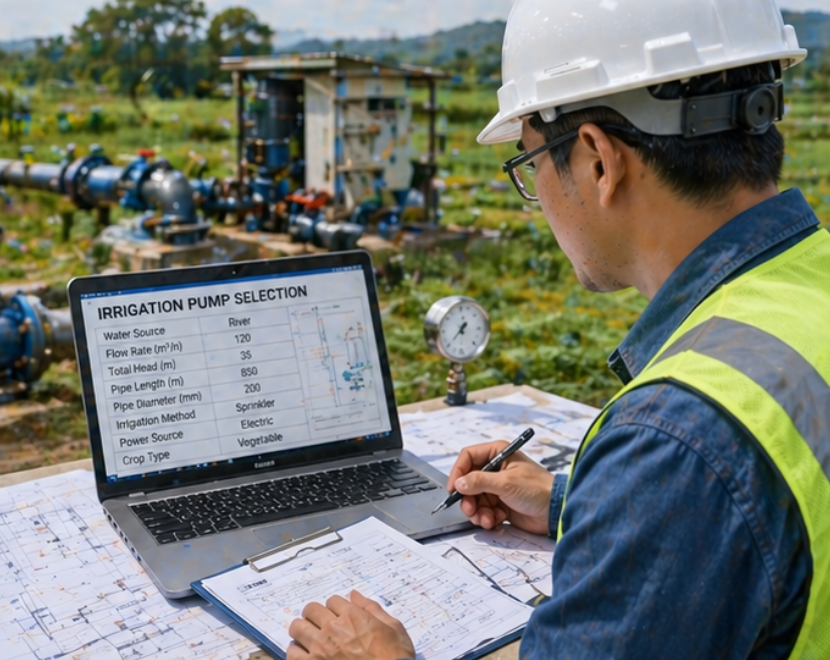
7. Common Applications Of Agricultural Irrigation Pumps
Conclusion
Need Help Choosing An Irrigation Pump?