How To Select A Sewage Pump For Wastewater Treatment
How To Select A Sewage Pump For Wastewater Treatment
Selecting the right sewage pump for wastewater treatment requires more than checking flow rate and motor power. Buyers should evaluate solids content, pump structure, head, material, sealing, installation method and long-term maintenance requirements.
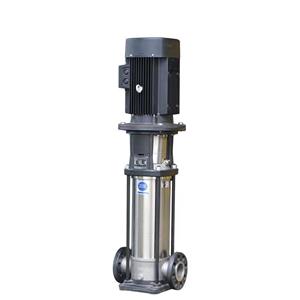
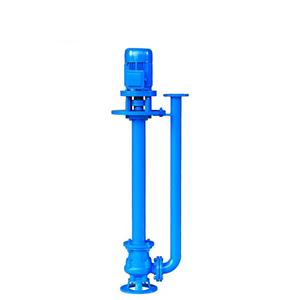
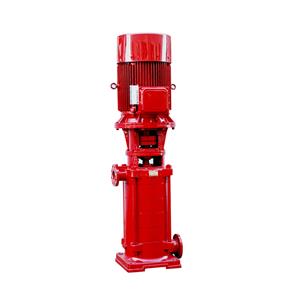
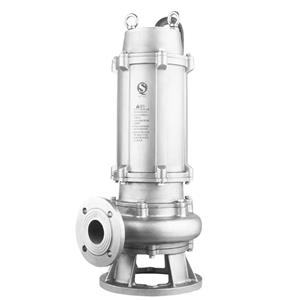
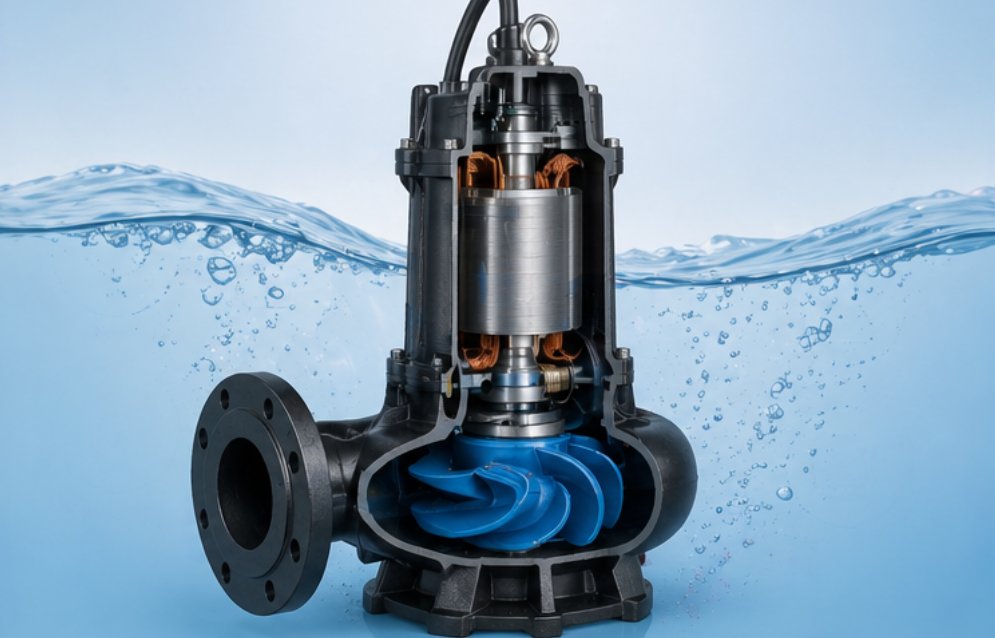
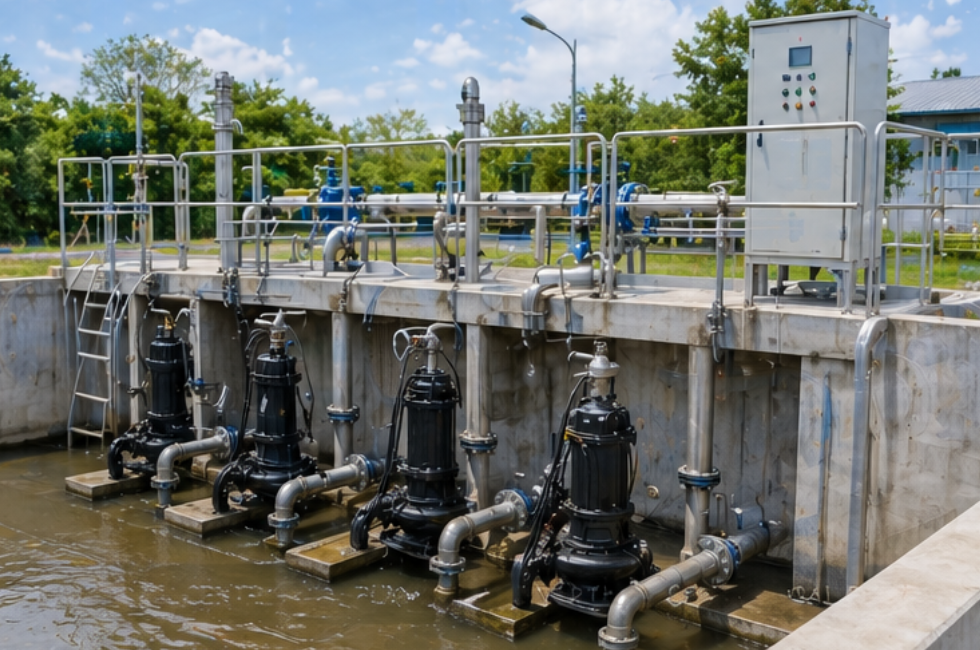
Get QuoteThe first step in selecting a sewage pump is to understand the wastewater condition. Municipal wastewater, industrial wastewater, drainage water, sludge-containing water and sewage with fibrous materials have different pump requirements. If the liquid contains large solids or long fibers, a standard clean water pump may become blocked quickly. Buyers should confirm whether the wastewater contains sand, sludge, paper, plastic, fibers, grease or corrosive substances. This information affects impeller design, pump passage size, motor load, sealing configuration and service life. For wastewater treatment projects, anti-clogging performance is often more important than simply choosing a larger motor. Sewage pumps are available in different structures, including submersible sewage pumps, vertical sewage pumps and dry-installed sewage pumps. Submersible sewage pumps are widely used in wastewater pits, lifting stations, drainage wells and sewage treatment plants because they can operate directly in the liquid. For larger wastewater treatment projects, the pump structure should match the installation space, maintenance method and operating depth. If the pump needs frequent inspection, buyers should consider guide rail installation, automatic coupling systems and convenient lifting design. Flow rate and head are basic parameters, but sewage pump selection also needs to consider solid passage capacity. Flow rate shows how much wastewater must be discharged within a certain time, while head includes vertical lift, pipe length, elbows, valves and system resistance. If the head is too low, wastewater cannot be lifted to the required discharge point. If the pump is oversized, it may waste energy and operate outside the efficient range. For sewage applications, the solid passage size should also match the actual waste particles in the system to reduce clogging risk. The impeller is one of the most important components of a sewage pump. Common impeller types include vortex impeller, channel impeller and cutting impeller. A vortex impeller offers better anti-clogging performance for wastewater with solids and fibers. A channel impeller can provide higher efficiency for sewage with moderate solid content. A cutting impeller may be used when fibrous materials need to be shredded before pumping. Buyers should not choose an impeller only according to price. The correct impeller design can reduce blockage, improve operating stability and lower maintenance costs in wastewater treatment systems. Sewage pumps often work in harsh environments. Pump casing, impeller, shaft and seal materials should be selected according to the wastewater condition. Cast iron is common for general municipal sewage and drainage applications. Stainless steel or special materials may be required when the wastewater contains corrosive chemicals. Mechanical seal quality is also critical. A poor sealing system can cause leakage, motor damage and downtime. For submersible sewage pumps, buyers should also confirm motor protection features such as overload protection, leakage detection, temperature protection and insulation grade. Sewage pumps are commonly used in wastewater treatment plants, municipal drainage systems, residential sewage lifting stations, industrial wastewater discharge, construction site drainage, basement drainage, pumping stations and public infrastructure projects. For project buyers, correct pump selection can reduce blockage, maintenance frequency and unexpected downtime. A reliable sewage pump should match not only the capacity requirement, but also the real wastewater condition and installation environment. To select a suitable sewage pump for wastewater treatment, buyers should confirm wastewater type, solid content, flow rate, head, impeller design, material, sealing system and installation method. Choosing the right sewage pump helps improve system reliability and reduce long-term maintenance cost. GT Pump provides sewage pump solutions for wastewater treatment, municipal drainage, industrial wastewater discharge and engineering projects. If you are selecting a sewage pump for your project, our team can help review your working conditions and recommend a suitable model. Send us your wastewater type, flow rate, head, solid content and installation requirements. GT Pump will help you choose a suitable sewage pump for your wastewater treatment project.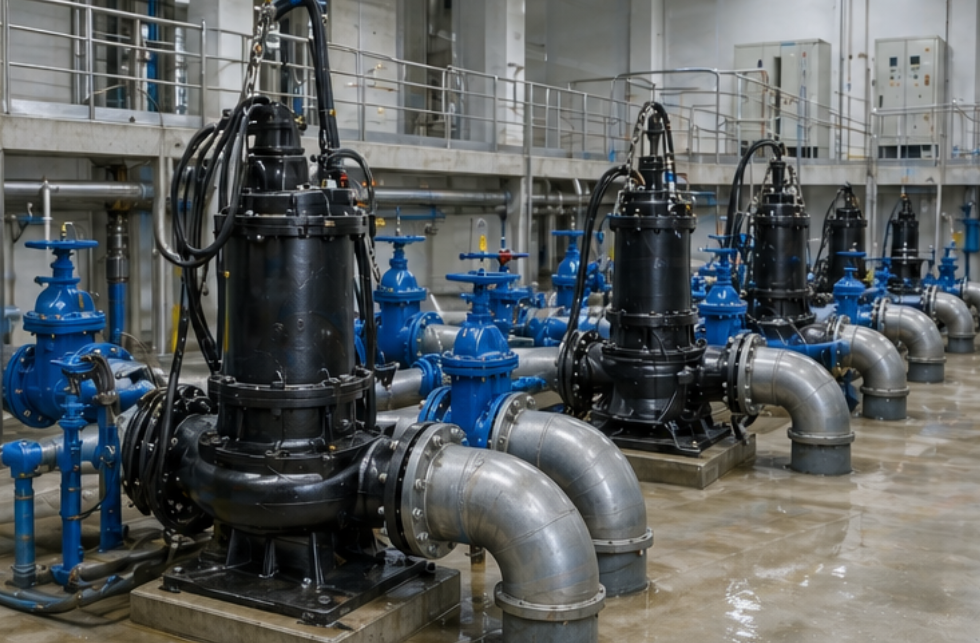
1. Confirm The Wastewater Type First
2. Choose The Correct Pump Structure
3. Match Flow Rate, Head And Solid Passage
4. Pay Attention To Impeller Design
5. Check Material, Seal And Motor Protection
6. Key Information Buyers Should Provide Before Quotation
Item What To Confirm Wastewater Type Municipal sewage, industrial wastewater, drainage water, sludge water or mixed wastewater Solid Content Particle size, fiber content, sludge concentration and possible clogging materials Flow Rate Required capacity in m³/h, L/min or GPM Head Vertical lift, pipe length, elbows, valves and discharge pressure Installation Method Submersible, dry-installed, guide rail coupling or fixed installation Power Supply Voltage, frequency, phase, cable length and control cabinet requirements 
7. Common Applications Of Sewage Pumps
Conclusion
Need Help Selecting A Sewage Pump?