What Buyers Should Check Before Ordering A Dewatering Pump
What Buyers Should Check Before Ordering A Dewatering Pump
A dewatering pump is often used in construction sites, mines, tunnels, basements, flood control and drainage projects. Before ordering, buyers should check water condition, flow rate, head, solids content, pump structure, motor protection and installation requirements.
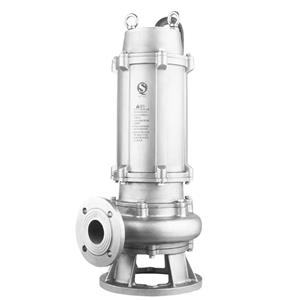
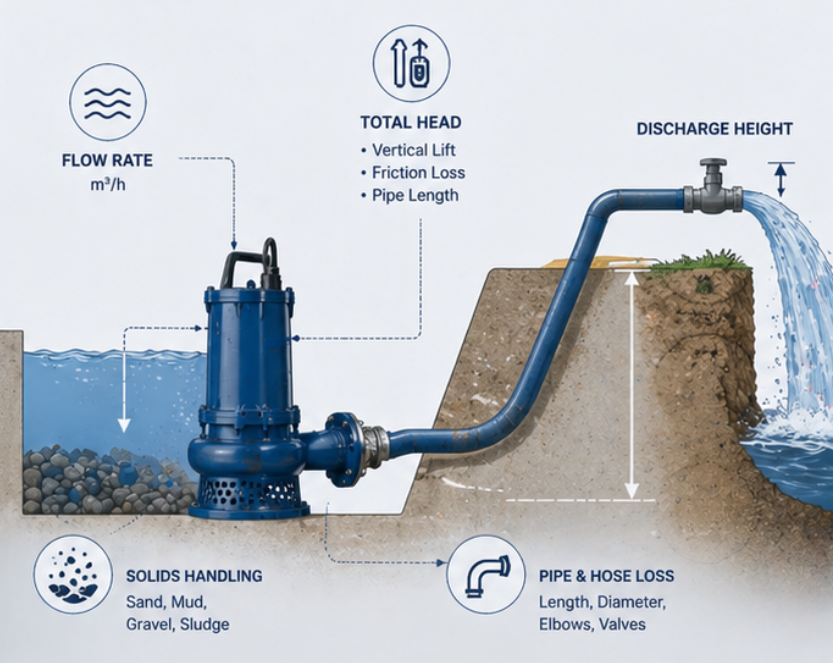
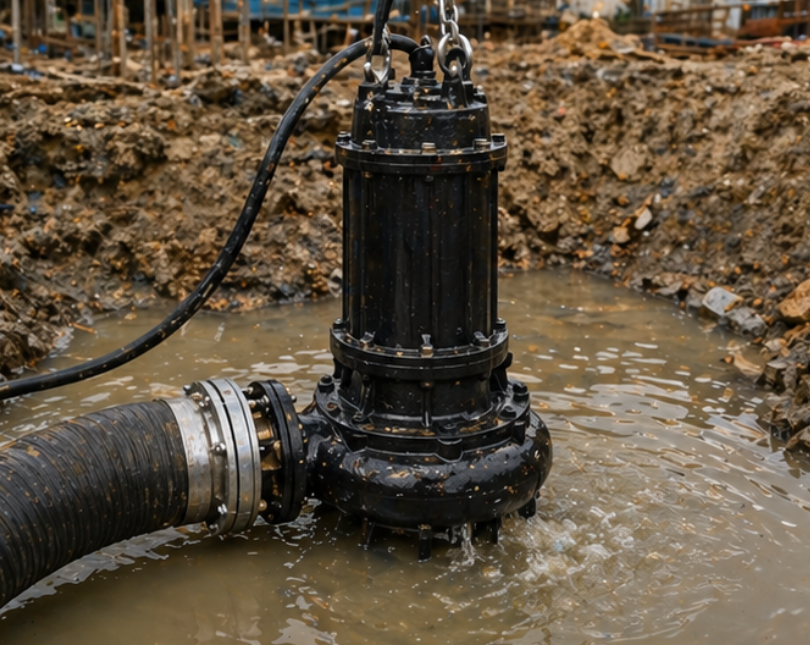
Get QuoteBefore ordering a dewatering pump, buyers should first confirm what kind of water needs to be removed. Clean water, muddy water, sandy water, rainwater, groundwater, mine water and wastewater require different pump designs. If the water contains sand, gravel, sludge or suspended solids, a normal clean water pump may wear quickly or become blocked. For construction and mining projects, water conditions may change during operation. Buyers should consider the worst working condition, not only the cleanest condition at the beginning of the project. This helps avoid pump failure, frequent maintenance and unexpected downtime. Flow rate and head are the basic parameters for dewatering pump selection. Flow rate means how much water must be discharged within a certain time. Total head includes vertical lifting height, horizontal pipe length, hose resistance, elbows, valves and discharge pressure. A common mistake is choosing a pump only by outlet diameter or motor power. If the head is not enough, water cannot be discharged to the target location. If the pump is oversized, it may waste energy, increase cost and operate outside its efficient working range. Dewatering pumps can be submersible, diesel-driven, electric motor driven, trailer-mounted or skid-mounted. Submersible dewatering pumps are suitable for pits, basements, tunnels and confined drainage areas. Diesel dewatering pumps are more suitable for remote construction sites, flood control and temporary drainage projects without stable power supply. Electric dewatering pumps are suitable when electricity is available and continuous operation is required. Trailer-mounted pump sets are useful when the pump needs to move between different sites. Buyers should choose the pump type according to power availability, mobility, operating depth and installation space. Dewatering projects often involve water with sand, mud, gravel or small solids. Buyers should check the pump’s solid passage capacity, impeller design and wear-resistant components. For abrasive water, the impeller, casing and wear plate may need stronger materials. If the pump will handle muddy water for long periods, durability becomes more important than the lowest price. A pump with poor wear resistance may lose performance quickly, increase power consumption and require frequent replacement of parts. Dewatering pumps often work in harsh environments, including rain, dust, mud, vibration and unstable power conditions. Buyers should check motor protection, insulation grade, cable length, leakage protection, overload protection and cooling method. For submersible pumps, sealing reliability is especially important. If the pump is used at a construction site or mine, the cable, control panel, grounding and lifting chain should also be checked. Safe installation reduces electrical risk, pump damage and downtime during continuous drainage work. Dewatering pumps are widely used in construction site drainage, foundation pit dewatering, tunnel drainage, mining drainage, basement flood control, municipal drainage, emergency flood response, quarry drainage and temporary water removal projects. For project buyers, the right pump should match the actual water condition, operating time, power condition and mobility requirement. A well-selected dewatering pump can help reduce delays, protect equipment and keep the worksite safer. Before ordering a dewatering pump, buyers should check water condition, solid content, flow rate, total head, pump type, power source, motor protection and site safety requirements. The lowest price is not always the best choice if the pump cannot handle real working conditions. GT Pump provides dewatering pump solutions for construction, mining, flood control, municipal drainage and temporary pumping projects. Our team can help review your working conditions and recommend a suitable pump configuration. Send us your water condition, flow rate, head, solid content, power source and site environment. GT Pump will help you choose a suitable dewatering pump for your project.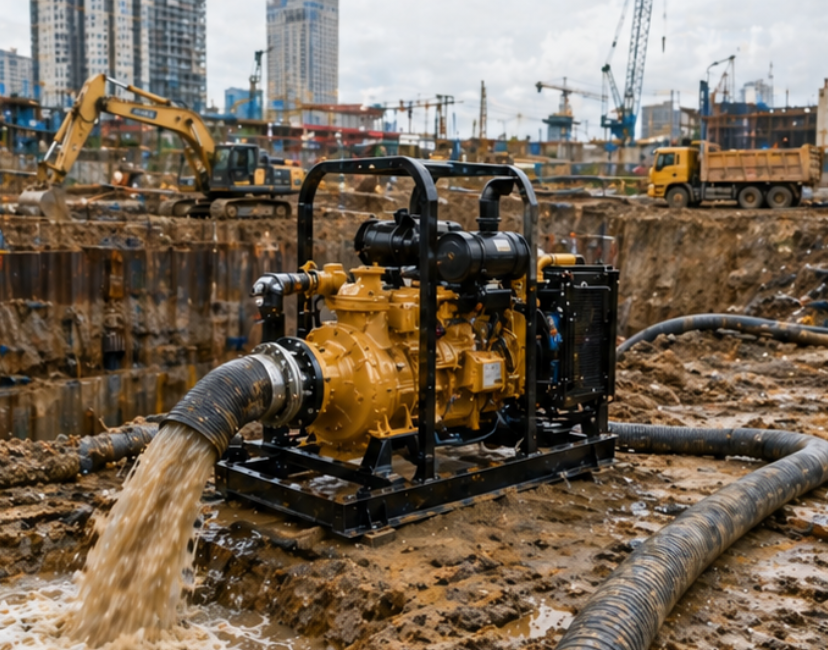
1. Check The Water Condition First
2. Confirm Flow Rate And Total Head
3. Match Pump Type With Site Conditions
4. Evaluate Solid Passage And Wear Resistance
5. Check Motor Protection And Site Safety
6. Dewatering Pump Buying Checklist
Item What Buyers Should Confirm Water Condition Clean water, muddy water, sandy water, rainwater, mine water or wastewater Solid Content Sand, sludge, gravel, suspended solids and particle size Flow Rate Required capacity in m³/h, L/min or GPM Total Head Vertical lift, pipe length, hose resistance and discharge height Power Source Electric power, diesel engine, generator or unstable site power Installation Submersible, dry installation, skid-mounted, trailer-mounted or temporary setup 
7. Common Applications Of Dewatering Pumps
Conclusion
Need Help Choosing A Dewatering Pump?