Industry news
-
Spare parts availability matters in industrial pump procurement because it directly affects downtime risk, maintenance efficiency, and long-term service confidence. Buyers who evaluate spare parts support early make safer and more practical purchasing decisions.
-
To evaluate pump performance stability under changing operating conditions, buyers should review the operating window, medium variation, system behavior, testing evidence, and supplier experience. A stable pump is not the one that only works at one perfect point, but the one that stays reliable when reality changes.
-
Before finalizing a custom industrial pump order, buyers should confirm technical inputs, configuration details, drawings, documentation, lead time, testing scope, and after-sales expectations. A well-confirmed order reduces uncertainty, avoids later change, and makes project execution much smoother.
-
To reduce procurement risk when sourcing pumps for overseas projects, buyers should act early on technical clarity, documentation, supplier review, testing scope, and support planning. Risk reduction does not come from one action, but from disciplined preparation across the whole procurement process.
-
Pump testing data matters more than basic specifications because it proves reality, reveals hidden quality issues, and improves supplier comparison. Buyers who rely on data make more confident procurement decisions than those who rely only on nominal claims.
-
To compare industrial pump suppliers effectively, buyers should look beyond catalogs and quotations. Technical understanding, documentation quality, testing transparency, delivery control, and after-sales support are what truly separate a dependable supplier from a risky one.
-
Before approving a pump for continuous duty service, buyers should check design stability, duty margin, materials, monitoring readiness, testing evidence, and maintenance practicality. Continuous service demands a higher level of preparation, and the right review can prevent costly failure later.
-
To verify whether an industrial pump can handle real site conditions, buyers need more than catalog data. They need detailed site analysis, similar application evidence, and testing plus startup support. A pump that matches real conditions reduces risk far more effectively than one that only looks correct on paper.
-
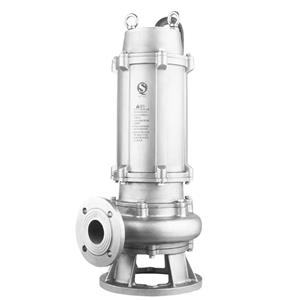
In conclusion, small sewage submersible pumps are indispensable guardians for modern residential and light commercial properties, preventing backups and damage. When selecting a pump, focusing on performance specs, durable construction, and smart features is key. Opting for a trusted manufacturer like Gaotian Pump, with its proven engineering, quality commitment, and application-focused designs, transforms this critical purchase from a simple component into a long-term investment in property protection and operational peace of mind.
-
In summary, the choice between a submersible sewage pump and a grinder pump is dictated by the composition of the wastewater and the system's hydraulic demands. The standard sewage pump efficiently handles typical, softer waste, while the grinder pump is the specialist for pulverizing tough, obstructive solids. By carefully evaluating your application's needs and selecting a purpose-built solution from a trusted manufacturer like Gaotian, you ensure a reliable, efficient, and trouble-free sewage handling system for years to come.