How To Select A Pump According To Flow Rate And Head
How To Select A Pump According To Flow Rate And Head
Flow rate and head are the two most critical parameters in pump selection. Choosing the wrong combination can lead to insufficient performance, high energy consumption, system instability or premature pump failure.
Get Quote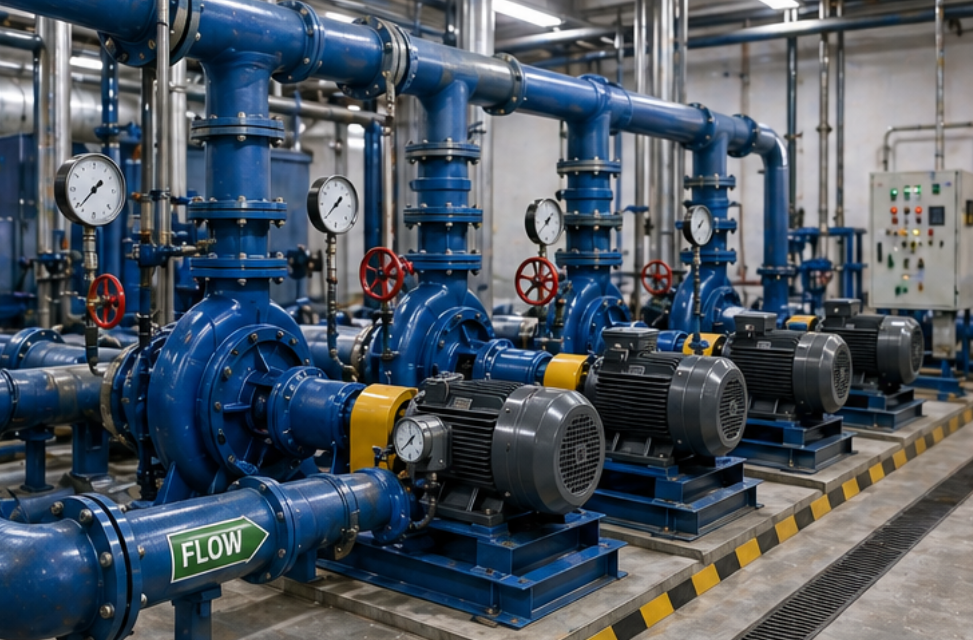
1. What Is Flow Rate In Pump Selection
Flow rate refers to the volume of liquid that a pump needs to move within a specific period of time. It is usually expressed in cubic meters per hour (m³/h), liters per minute (L/min) or gallons per minute (GPM). The required flow rate depends on the application, such as water supply, drainage, irrigation, cooling circulation or chemical transfer.
Buyers should not guess the flow rate based on pipe size alone. Instead, it should be calculated according to system demand. For example, in a cooling system, the flow rate depends on heat load. In a drainage system, it depends on how quickly water must be removed.
2. What Is Head And Why It Matters
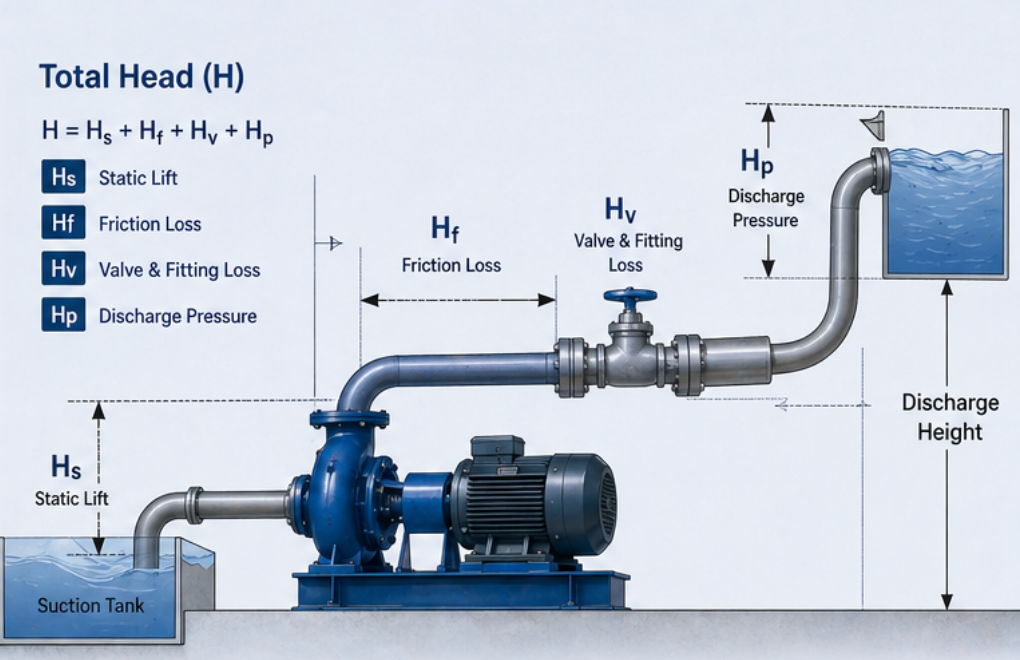
Head refers to the total height or pressure that a pump must overcome to move the liquid from the source to the discharge point. It includes vertical lifting height, pipeline friction loss, valve resistance, bends and system pressure.
A common misunderstanding is to consider only vertical height. In reality, pipeline length and resistance can significantly increase the required head. If the head is underestimated, the pump will not deliver water effectively. If it is overestimated, the pump may operate inefficiently and consume more energy.
3. How To Calculate Total Head
Total head is calculated by combining several factors:
Vertical height (static head)
Pipeline friction loss
Valve and fitting resistance
Discharge pressure requirement
For accurate pump selection, buyers should provide pipeline length, pipe diameter, number of valves, elbows and the required discharge condition. Engineers can then calculate a more precise total head value and recommend the correct pump model.
4. Match Pump Performance Curve With Working Point
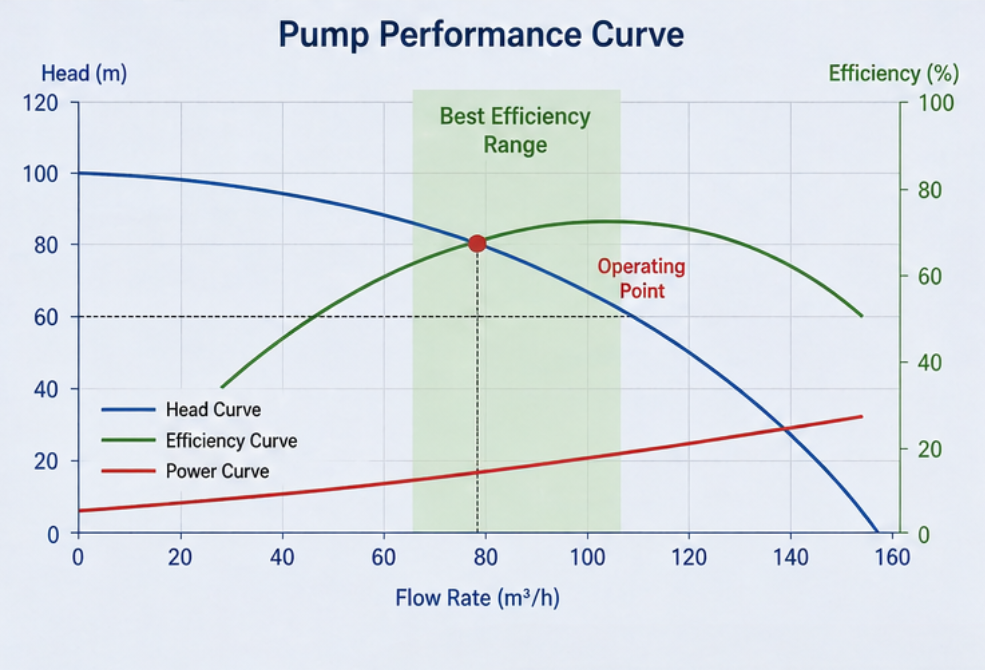
Every pump has a performance curve that shows the relationship between flow rate and head. The best working point is usually near the pump’s highest efficiency area. Selecting a pump that operates too far from this point can lead to vibration, noise, overheating and reduced service life.
Buyers should avoid choosing pumps only based on maximum flow or maximum head. Instead, the selected pump should match the actual operating point where both flow and head requirements meet the system demand.
5. Common Mistakes In Flow And Head Selection
Many pump failures and inefficiencies are caused by incorrect parameter selection. Common mistakes include selecting a pump based only on pipe size, ignoring pipeline resistance, choosing oversized pumps for safety margin, or not considering future operating conditions.
Another common issue is not accounting for changes in water level or system demand. For example, in dewatering or irrigation projects, water levels may vary significantly, which directly affects head calculation.
6. Key Data Buyers Should Provide
| Item | Required Information |
|---|---|
| Flow Rate | Required capacity in m³/h, L/min or GPM |
| Vertical Height | Distance between water source and discharge point |
| Pipeline Length | Total pipe length and diameter |
| System Components | Valves, elbows, filters and fittings |
| Liquid Type | Clean water, wastewater, chemical liquid or slurry |

7. Applications Where Flow And Head Selection Is Critical
Correct flow and head selection is essential in water supply systems, irrigation projects, industrial cooling, wastewater treatment, construction dewatering, chemical transfer and fire protection systems. Each application has different requirements, and the pump must be selected accordingly.
For overseas project buyers, providing accurate technical data helps pump manufacturers recommend suitable models faster and reduces procurement risk.
Conclusion
Flow rate and head must be considered together when selecting a pump. A correct combination ensures stable operation, energy efficiency and longer service life. Incorrect selection can lead to system failure and increased cost.
GT Pump provides industrial pump solutions for water transfer, drainage, irrigation and engineering projects. Our team can help calculate flow rate and head based on your system and recommend the right pump model.
Need Help Selecting A Pump?
Send us your flow rate, head, pipeline details and application. GT Pump will help you select the right pump for your project.
Contact Us Get Quote